
Why You'll Love This Recipe
- Three pantry ingredients make the dough — sweet rice flour, sugar and water.
- The dumplings cook in about three minutes and tell you when they are done by floating.
- Rolling the balls is the kind of job children actually want to help with.
- Naturally gluten-free, since shiratamako is pure rice flour.
Ingredients for shiratama dango
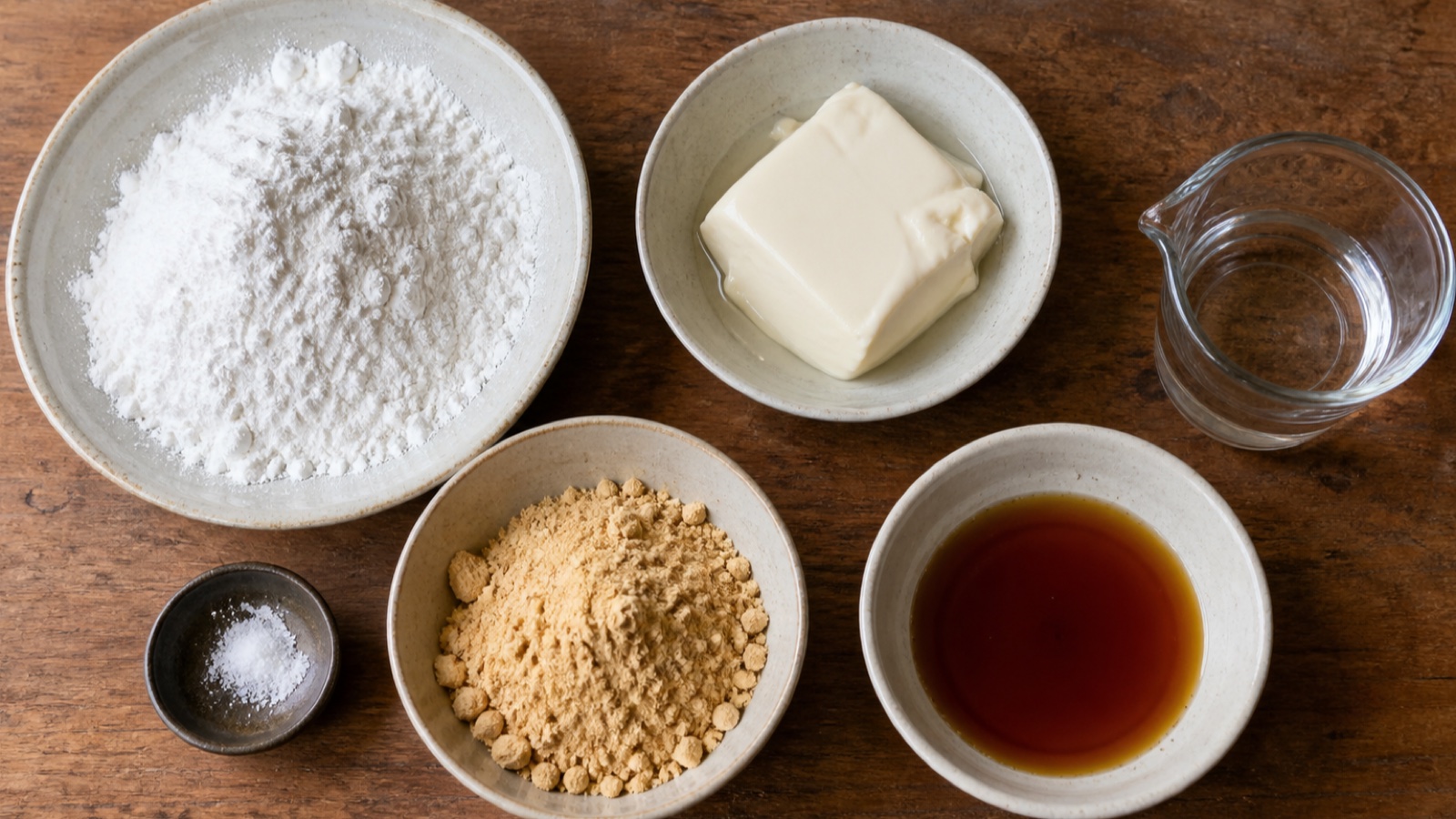
Here's what you'll need to make this recipe:- Shiratamako (Japanese sweet rice flour): 1 cup (130 g). This is glutinous rice flour sold in small pearly lumps that dissolve as you work in the water. Mochiko will also work, though the texture comes out slightly less springy.
- Granulated sugar: ¼ cup (50 g), mixed into the dough so the dumplings are lightly sweet on their own.
- Water: ½ cup (120 ml), at room temperature, added gradually rather than all at once.
- Sweetened red bean paste (anko): ½ cup (150 g), which works out at 2 tablespoons per serving. Tinned or tubbed anko from an Asian grocer is fine.
How to Make shiratama dango
Follow these steps to make 20 dango, enough for 4 servings:
Step 1: Mix the Dry Ingredients
In a mixing bowl, whisk together the 1 cup of shiratamako and the ¼ cup of sugar so the sugar is evenly distributed before any water goes in.
Step 2: Work in the Water
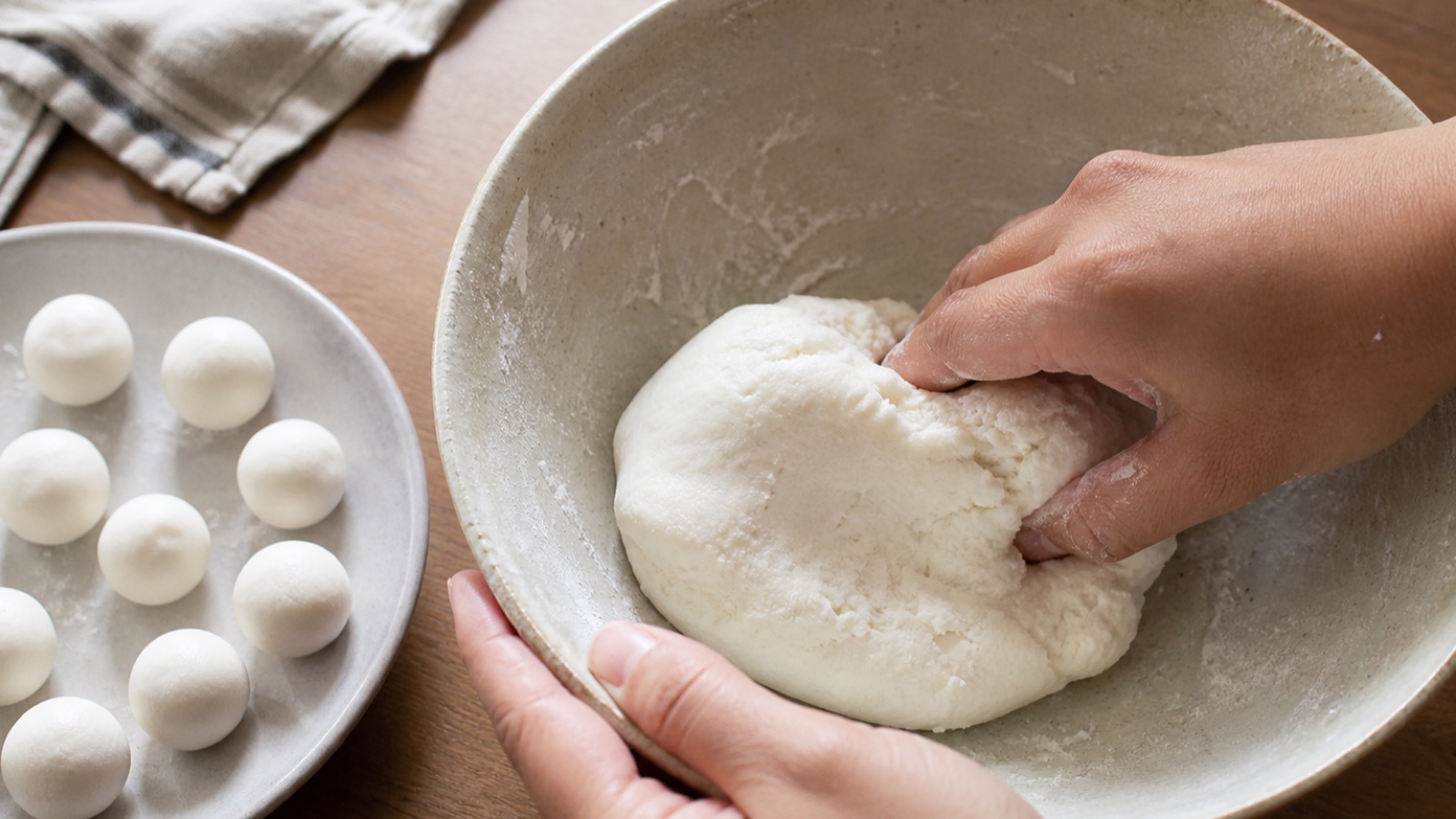
Add the ½ cup of water a little at a time, working it in with your hands. Stop when the dough is smooth and about as soft as your earlobe. If it cracks as you press it, add water a teaspoon at a time; if it clings to your palm, dust in a little more flour.
Step 3: Roll the Dango
Divide the dough into 20 equal pieces, roughly 15 g each, and roll every piece into a smooth ball. Press a shallow dimple into the middle of each one — it helps the centre cook through at the same rate as the outside.
Step 4: Boil
Bring a large pot of water to a rolling boil and add the dango in two batches. They sink at first, then rise. Once they float, give them 2 more minutes, which comes to about 3 minutes in total.
Step 5: Shock in Ice Water
Lift the dango straight out with a slotted spoon into a bowl of ice water. Leave them 1 to 2 minutes, until they firm up and turn springy, then drain them well. Skipping this step is the difference between chewy dango and soft, slightly gluey ones.
Step 6: Serve
Divide the dango between 4 bowls, 5 to a bowl, and top each portion with 2 tablespoons of red bean paste. Serve at room temperature.
You Must Know
- The ice bath is not optional.
- Boiling sets the dumplings, but the cold water is what tightens them into that springy, resilient chew that makes shiratama dango worth making.
Perfecting the Texture
The earlobe test is the only measurement that matters here, because flour absorbs water differently depending on brand and humidity. Aim for a dough that holds a fingerprint without cracking at the edges. If a test dumpling falls apart in the pot, the dough was too wet — work in a spoonful more flour and try again.Add Your Touch
A teaspoon of matcha powder whisked into the dry flour turns the dango pale green and adds a pleasant bitterness against the red bean paste. Fresh fruit — sliced strawberries, mandarin segments — works in place of the anko if you would rather keep things lighter.Storing & Reheating
Shiratama dango are at their best on the day they are made. Store leftovers in an airtight container in the fridge for up to 2 days. They firm up considerably when cold, so let them come back to room temperature for 15 minutes, or steam them for 30 seconds, before serving.Helpful Tips
- Roll the balls with slightly damp hands to stop the dough sticking.
- Cook in two batches so the pot stays at a full boil.
- Keep the ice water genuinely icy — a few cubes floating in cool water is not enough.
FAQs :
What is shiratamako and can I substitute it?
Shiratamako is Japanese glutinous rice flour, sold as small pearly granules rather than a fine powder. It gives dango their characteristic springy chew. Mochiko, a more finely milled sweet rice flour, is the closest substitute and can be used cup for cup, though the finished dumplings are a little softer. Regular rice flour is not a substitute — it has no glutinous starch and the dough will not hold together.How do I know when the dango are cooked?
The dumplings tell you themselves. They sink when they go into the boiling water and rise to the surface as they cook through. Once they are floating, count 2 more minutes and then lift them out. From start to finish that is about 3 minutes.Why did my dango turn out hard?
Almost always because the dough was too dry. Shiratamako needs enough water to reach that earlobe softness, and a stiff dough boils up dense. The other common cause is refrigeration — dango firm up in the fridge and need to come back to room temperature before they taste right again.Can I make shiratama dango ahead of time?
You can roll the balls a few hours ahead and keep them on a lightly floured tray, covered, at room temperature, then boil them just before serving. Boiling them in advance is less successful; they lose their spring within a day.Conclusion for shiratama dango :
Shiratama dango ask very little of you: three ingredients, one pot, and about twenty minutes. What they give back is a texture you cannot really get any other way, and a base that takes whatever topping you have to hand. Start with the red bean paste, then work through matcha, fruit and whatever else the season suggests.Shiratama Dango
- Total Time: 15 minutes
- Yield: 4 servings (20 dango) 1x
Description
Shiratama dango are soft, chewy Japanese dumplings made from just three pantry ingredients: sweet rice flour, sugar and water. They boil in about three minutes, cool in an ice bath until springy, and are served here with a spoonful of sweetened red bean paste. Simple enough for a weeknight sweet, and a lovely thing to roll together with kids.
Ingredients
- 1 cup (130 g) shiratamako (Japanese sweet rice flour)
- ¼ cup (50 g) granulated sugar
- ½ cup (120 ml) water, room temperature
- ½ cup (150 g) sweetened red bean paste (anko), for topping
Instructions
- In a mixing bowl, whisk together the shiratamako and sugar.
- Add the water a little at a time, working it in with your hands, until you have a smooth dough about as soft as your earlobe. If it cracks, add water 1 teaspoon at a time; if it sticks to your palm, dust in a little more flour.
- Divide the dough into 20 equal pieces (about 15 g each) and roll each one into a smooth ball. Press a shallow dimple into the centre of each ball so it cooks through evenly.
- Bring a large pot of water to a rolling boil. Drop in the dango in two batches. They will sink, then rise; once they float, cook 2 minutes longer (about 3 minutes total).
- Lift the dango straight into a bowl of ice water with a slotted spoon and leave for 1 to 2 minutes, until firm and springy. Drain well.
- Divide the dango between 4 bowls, 5 per serving, and top each portion with 2 tablespoons of red bean paste. Serve at room temperature.
- Prep Time: 10 minutes
- Cook Time: 5 minutes
- Category: Dessert
- Method: Boiling
- Cuisine: Japanese
Nutrition
- Serving Size: 5 dango with 2 tablespoon anko (about 75 g)
- Calories: 260
- Sugar: 28g
- Sodium: 10mg
- Fat: 0.5g
- Saturated Fat: 0g
- Unsaturated Fat: 0.5g
- Trans Fat: 0g
- Carbohydrates: 60g
- Fiber: 2g
- Protein: 4g
- Cholesterol: 0mg
Keywords: Shiratama dango are best on the day they are made. Store leftovers in an airtight container in the fridge for up to 2 days; they firm up when cold, so let them sit at room temperature for 15 minutes or steam them for 30 seconds before serving.


